Norfolk & Suffolk Cheese Guide

This isn’t a guide written by a blogger… this is written by a cheesemonger who actually selects, cuts, and sells this cheese.

Over the past thirty years, British cheese has quietly undergone a remarkable transformation. Where once traditional regional varieties faded, and mass production dominated, a revival has taken hold—bringing raw milk cheesemaking back into the spotlight and inspiring small dairies to prioritise flavour, pasture, and craftsmanship over mere volume.

While regions like the South West have long basked in global acclaim for Cheddar, Nottinghamshire has become synonymous with Stilton, and Yorkshire proudly guards its Wensleydale heritage, East Anglia remained largely overlooked. For years, this charming corner of England was absent from the national cheese conversation.

But times have changed. Today, East Anglia shines as an emerging destination for serious cheese lovers. Across Norfolk and Suffolk, passionate farmhouse cheesemakers are crafting distinctive cheeses that celebrate character and confidence rather than scale. Their dedication to authentic methods and local ingredients is reshaping perceptions—and placing East Anglia firmly on the map as a region of exceptional dairy artistry.

This guide celebrates the people behind this renaissance and the unique cheeses that are helping East Anglia claim its rightful place among Britain’s finest cheesemaking regions. Prepare to be inspired by a story of tradition renewed and flavours rediscovered in one of England’s most captivating landscapes.

Why Norfolk is a Great Place for Cheese

Several factors make Norfolk particularly well-suited to cheesemaking.

Rich dairy farming heritage
The county’s fertile farmland and mild climate support healthy dairy herds producing excellent milk.

Small-scale artisan production
Many Norfolk cheesemakers operate on a farm scale, allowing them to focus on quality and character rather than volume.

Growing reputation for British artisan cheese
Across the UK there has been a revival of farmhouse cheesemaking, and Norfolk is part of that story.

East Anglian Cheese Makers

Norfolk’s Original Modern Cheesemaker

Before East Anglia’s current rise as a serious cheese region, there was Mrs Temple’s.

Stephen and Catherine Temple returned to the family farm in 1998, a dairy founded by Stephen’s great-grandfather, and began exploring a simple but powerful idea — using their own milk to create something of greater value. What started in the farm kitchen, inspired by childhood memories, books and cheesemaker gatherings, quickly became one of Norfolk’s most important cheese businesses.

At the heart of it all is their herd of Brown Swiss cows — a breed chosen not for volume, but for quality. Their milk is naturally rich in kappa casein, making it ideal for cheesemaking. Switched to in 2012, the herd has become central to the character of the cheeses: healthy, long-living animals producing milk with depth, structure and consistency — and, as Catherine will tell you, plenty of personality too.

The farm itself reflects a modern approach to sustainability, powered in part by renewable energy through biomass and anaerobic digestion, turning farm waste into heat and electricity for the cheesemaking process.

From these foundations, Mrs Temple’s has built a range of cheeses named after the local landscape — each one rooted in place, but inspired by wider European traditions.

The Cheeses of Mrs Temple’s

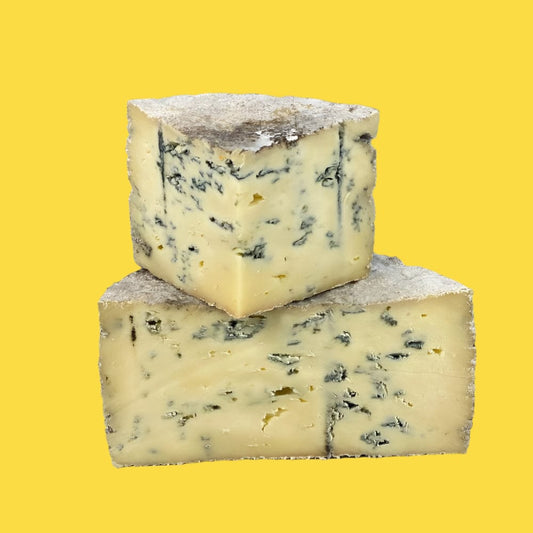
Binham Blue

A soft, creamy blue with a melt-in-the-mouth texture and gentle veining, offering savoury depth without overpowering strength. The flagship cheese and a consistent award-winner.

Copys Cloud

A soft, bloomy rind cheese in the Camembert style, with a delicate mushroom aroma and a rich, creamy centre that softens beautifully as it ripens.

Gurney Gold

A washed rind cheese with a distinctive golden-orange hue and a supple, melting texture, reminiscent of Taleggio with a savoury, gently pungent character.

Walsingham

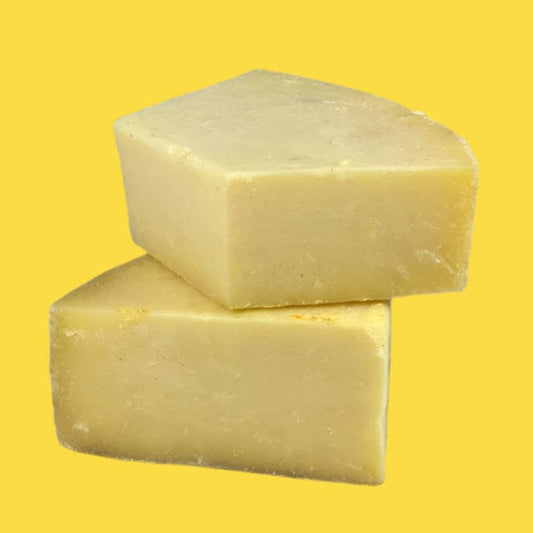
A hard, pressed cheese in the cheddar style, offering a firm texture, mellow savouriness and the kind of structure that makes it perfect for a traditional ploughman’s.

Wells Alpine

Inspired by an Alpine cycling trip, this continental-style cheese has a firm texture and nutty, Comté-like character, with sweet, savoury depth and a clean finish.

Awards & Recognition

Mrs Temple’s cheeses have consistently been recognised at national level.

  • Binham Blue — Bronze & Silver, British Cheese Awards
  • Wells Alpine & Wighton — Award-winning across multiple competitions
  • Gurney’s Gold — Gold medal winner
  • Artisan Cheese Awards 2023 — Multiple silvers across the range
  • Norfolk Magazine Food & Drink Awards 2024Field to Fork Winner

As Catherine herself puts it:
“It’s a whole team — it’s not just about me.”

Why Mrs Temple’s Matters

Mrs Temple’s isn’t just another cheesemaker.

It’s the starting point of Norfolk’s modern cheese story.

Long before Baron Bigod and the current wave of East Anglian recognition, this was a farm proving that great cheese could be made here — from local milk, with skill, care and a clear sense of place.

And in many ways, everything that has followed owes something to that first step taken in a farm kitchen in Wighton.

Modern Norfolk Cheesemaking at Its Most Confident

Norfolk & Better Farm

Set in the heart of rural Norfolk, Norfolk & Better Farm represents the new wave of East Anglian cheesemaking — farm-led, quietly ambitious and increasingly recognised on the national stage.

Working with milk produced on-site, their cheeses reflect both the quality of local pasture and a clear understanding of modern British cheese styles. This is not about imitation, but interpretation — taking familiar formats like Brie, Camembert and blue cheese, and giving them a distinctly Norfolk identity.

In a relatively short space of time, their cheeses have moved from local curiosity to award-winning staples, with growing recognition among cheesemongers and judges alike.

The Cheeses of Norfolk & Better Farm

Breckland Brie

A soft, bloomy rind cheese with a smooth, creamy interior and gentle mushroom notes, offering a rich yet balanced take on the classic Brie style.

Norbert

A Camembert-style cheese that softens beautifully as it ripens, developing a savoury, buttery depth with a subtle earthy finish.

Jiffler

A soft, approachable cheese with a fresh, creamy character and delicate lactic notes, making it an easy addition to any cheeseboard.

Jiffler Blue

A bold yet balanced blue cheese with a creamy texture and well-distributed veining, delivering savoury depth without overwhelming sharpness.

Awarded Best British Blue 2026 at the British & Irish Cheese Awards, marking it as one of the standout cheeses in the country.

Recognition & Reputation

Norfolk & Better Farm’s rise has been swift but well-earned.

The standout moment came with Jiffler Blue, which took the title of Best British Blue 2026 at the British & Irish Cheese Awards — a significant achievement in a category long dominated by established names.

It’s a clear signal that East Anglia is no longer emerging — it’s competing at the very top level.

Why Norfolk & Better Farm Matters

Norfolk & Better Farm embodies the confidence of modern East Anglian cheesemaking.

These are cheeses that:

  • Respect traditional styles
  • Reflect local milk and landscape
  • Stand comfortably alongside the best in Britain

If Mrs Temple’s laid the foundations, producers like Norfolk & Better Farm are helping define what comes next.

And if the trajectory continues, they won’t just be part of the story — they’ll be leading it.

Precision, Purity & Some of Britain’s Finest Soft Cheeses

If there is one producer that defines the finesse of East Anglian cheesemaking, it is St Jude Cheese.

Now based at Fen Farm in Wheatacre, this small-scale operation has earned a reputation among cheesemongers and chefs for producing some of the most refined soft cheeses in Britain. These are not loud cheeses. They are precise, balanced and deeply expressive of the milk they are made from.

Everything here is about control — of acidity, of moisture, of maturation — resulting in cheeses that reward attention rather than demand it.

And increasingly, they are becoming essential fixtures on serious cheeseboards.

The Cheeses of St Jude Cheese

St Jude

A lactic-set soft cheese that has become something of a modern British classic. Light, mousse-like and delicately structured, with fresh citrus notes and a clean, mineral finish.

St Cera

Washed during maturation to develop a golden rind and savoury depth, St Cera is supple and silky, offering brothy, gently nutty flavours with a long, warming finish.

St Helena

A richer, more indulgent soft cheese with a fuller body, combining creamy depth with a subtle savoury edge and a beautifully rounded finish.

St Bede

A newer addition to the range, St Bede is a raw milk Camembert-style cheese with a gently lactic core that softens as it ripens. Its Geotrichum rind develops more red-fruited, yeasty aromas rather than the typical cabbage or allium notes, giving it a refined and distinctive character.

Recognition & Awards

St Jude Cheese is not just respected — it is consistently recognised at the highest level of British and international competition.

Across multiple years, their cheeses have received top honours at the World Cheese Awards and the British Cheese Awards, including Gold and Super Gold distinctions — placing them among the very best cheeses produced anywhere in the world.

This level of recognition is rare for a producer of this scale and speaks directly to the precision and consistency of their work

Style & Character

St Jude cheeses are defined by:

  • Exceptional milk expression
  • Precision lactic fermentation
  • Controlled, elegant ripening
  • Balance over intensity

These are cheeses that don’t overpower — they evolve.

Why St Jude Cheese Matters

In a region now gaining recognition for its cheese, St Jude represents the highest level of technical skill.

These are the cheeses that cheesemongers recommend when someone asks for something truly good rather than simply familiar.

They show that East Anglia is not just producing great cheese — it’s producing some of the most refined cheese in the country. And with the introduction of St Bede, that story is still being written.

Clothbound Tradition in the North Norfolk Countryside

Set in the rolling countryside of Little Barningham, Ferndale Farm is a family-run mixed farm producing what can best be described as proper old-fashioned farmhouse cheese.

This is cheesemaking rooted in tradition — unpasteurised milk, clothbound maturation and a clear respect for the methods that define classic British territorial cheeses. Alongside their cheesemaking, the farm also produces high-quality potatoes under the well-known Great Unwashed brand, reinforcing their reputation for honest, local produce.

At the centre of the range is Norfolk Dapple, a cheese that has, over time, become synonymous with the county itself.

The Cheeses of Ferndale Farm

Norfolk Dapple

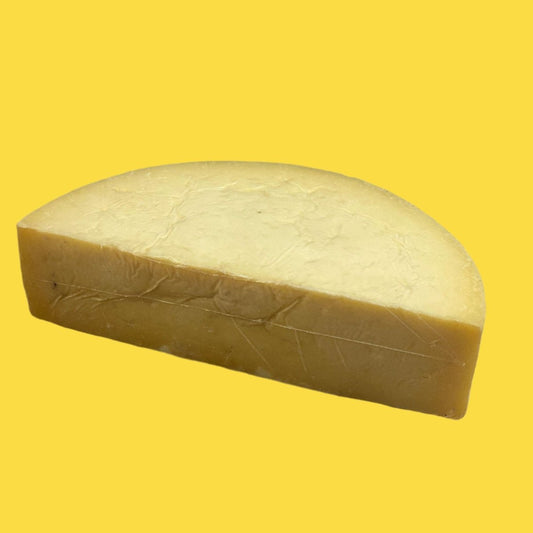
An unpasteurised, clothbound hard cow’s milk cheese, matured to develop a firm, slightly crumbly texture and a mellow, savoury depth. Its distinctive dappled rind — echoing the feathers of a barn owl — has become one of the most recognisable cheeses in Norfolk.

Awarded Silver and Bronze medals at the British Cheese Awards.

Smoked Norfolk Dapple

A smoked variation of the original, where the gentle smokiness enhances the natural buttery richness without masking the character of the cheese.

Norfolk Pinkfoot

A softer, more accessible cheese with a creamy texture and mild, rounded flavour, offering an easy introduction to the Ferndale range.

Norfolk Tawny

A semi-hard, raw milk cheese washed in a thick local ale during maturation, giving it a firmer rind and a deeper, savoury character.

Awarded Bronze at the Artisan Cheese Awards 2016 — achieved within its early batches.

Now being phased out due to the challenges of maintaining consistency, with new cheeses currently in development.

Style & Character

Ferndale Farm cheeses are defined by:

  • Approachability and balance
  • Consistent texture and flavour
  • Everyday versatility
  • A modern interpretation of British territorial styles

These are cheeses that work just as well in a sandwich as they do on a cheeseboard.

Recognition & Awards

Ferndale Farm’s cheeses have earned consistent recognition at the national level, reflecting both the quality of milk and traditional farmhouse methods.

  • Norfolk Dapple — Silver and Bronze medals, British Cheese Awards
  • Norfolk Tawny — Bronze, Artisan Cheese Awards 2016

These awards, particularly for Norfolk Dapple, reinforce its position as one of the defining cheeses of the region.

Why Ferndale Farm Matters

Not every great cheese needs to be complex or challenging.

Ferndale Farm plays an important role in the East Anglian cheese landscape by producing cheeses people return to again and again — reliable, enjoyable and proudly local.

And with new developments on the horizon, their story is far from finished.

Ewe’s Milk Cheesemaking in the Norfolk Fens

Wilton Farm brings something distinctive to the East Anglian cheese landscape — ewe’s milk cheeses, made in small batches with care, precision and a strong sense of heritage.

Using pasteurised sheep’s milk produced on site, the process remains hands-on from start to finish. Curds are carefully cut, hand-ladled into moulds, salted the following day and turned daily until ready — a method that prioritises texture, consistency and character over speed.

This is cheesemaking that feels considered. Nothing rushed. Nothing overworked.

A Story That Defines Norfolk Cheese

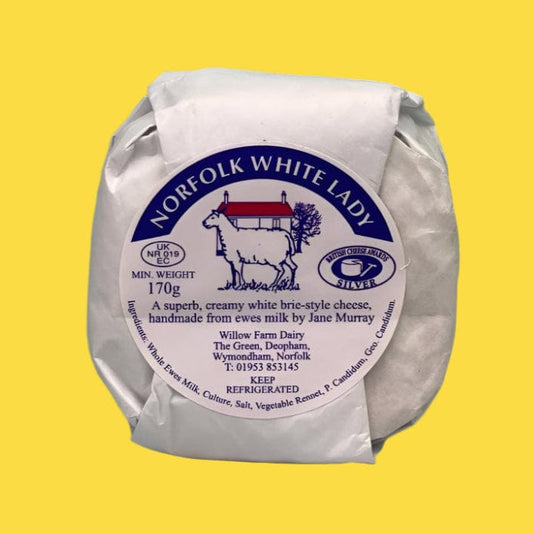
The story begins with Jane Murray, who started milking Friesland dairy sheep in 1986. After a year of trial and error, she launched Norfolk White Lady in 1999 — the first cheese to be produced commercially in Norfolk.

The name tells its own story:

her flock of white sheep grazing against the dark fenland landscape, the white bloomy rind of the cheese, and Jane herself — one of the few female cheesemakers at the time.

A year later came Wissington, a firmer, Manchego-style cheese named after the prominent Wissington sugar beet factory that dominates the local skyline.

After more than two decades of success, the business was passed on in 2021 to the Enefer family at Wilton Farm — a fourth-generation farming family with deep roots in Norfolk, now continuing and evolving the cheesemaking tradition.

The Cheeses of Wilton Farm

Norfolk White Lady

A soft, bloomy rind ewe’s milk cheese with a delicate, creamy texture and gentle, slightly sweet richness. Elegant and refined, with a clean finish that makes it a standout on any cheeseboard.

Wissington

A firmer, Manchego-style cheese with a structured texture and nutty, savoury depth. Richer than cow’s milk cheeses, with a lingering, slightly sweet finish typical of ewe’s milk.

Style & Character

Wilton Farm cheeses are defined by:

  • Ewe’s milk richness and depth
  • Small-batch, hands-on production
  • Balanced, refined flavour
  • A strong connection to Norfolk’s fenland landscape

These are cheeses that offer something different — fuller, rounder and often more complex than their cow’s milk counterparts.

Looking to the Future

Now run by Nathan and Linda Enefer, alongside Lee and Becky, Wilton Farm continues to evolve as a diverse, sustainable family business.

The transition into cheesemaking marked a new chapter — with a purpose-built dairy now housed within a converted farm building, and a renewed focus on bringing farming and food production together.

It’s a natural progression for a family committed to quality, sustainability and the long-term future of the land they farm.

Why Wilton Farm Matters

Wilton Farm adds an important dimension to the East Anglian cheese story.

In a region largely defined by cow’s milk cheeses, their ewe’s milk range brings richness, diversity and a clear point of difference.

And perhaps more importantly, it continues a lineage that began with Norfolk’s first commercial cheesemaker — ensuring that this part of the region’s story is not only preserved, but carried forward.

Ewe’s Milk Cheesemaking in the Norfolk Fens

The Goat Shed

The Goat Shed brings a fresh and distinctive voice to East Anglian cheesemaking — one built around goat’s milk, sustainability and a clear connection between farming and food.

Set in the Norfolk countryside along the River Wensum, this is a modern dairy with traditional values. The goats are central to everything: well cared for, milked on site and producing milk that is clean, expressive and perfectly suited to cheesemaking.

From the outset, the aim has been simple — to create high-quality, approachable goat’s cheeses that showcase just how versatile and enjoyable goat’s milk can be.

The Cheeses of The Goat Shed

Wensum White

A soft, fresh goat’s cheese with a smooth, creamy texture and bright, citrus-led acidity. Clean, delicate and refreshing, it delivers all the character of goat’s milk without overwhelming sharpness.

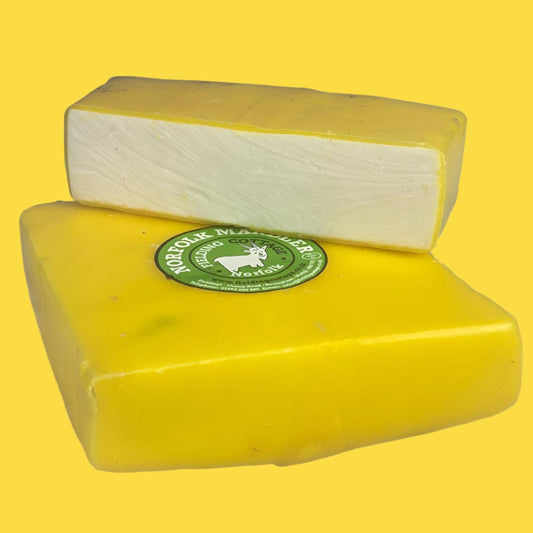
Norfolk Mardler

A more developed goat’s cheese with a fuller body and a slightly firmer texture, offering a balanced combination of fresh acidity and gentle savoury depth.

Style & Character

The Goat Shed cheeses are defined by:

  • Clean, fresh goat’s milk flavour
  • Bright, citrus acidity
  • Smooth, approachable textures
  • A balance that appeals to both newcomers and enthusiasts

These are cheeses that often change perceptions — particularly for those who think they don’t like goat’s cheese.

A Modern Norfolk Dairy

The Goat Shed reflects a growing movement within East Anglia — producers who are not only focused on flavour, but on how that flavour is achieved.

From animal welfare to land management, the emphasis is on doing things properly, creating a direct link between the quality of life on the farm and the quality of the cheese produced.

It’s a model that feels both modern and necessary — and one that fits naturally within the evolving East Anglian food landscape.

Why The Goat Shed Matters

In a region increasingly recognised for its cheese, The Goat Shed adds something essential: contrast.

Goat’s milk brings a different flavour profile, a different texture, and a different experience to the cheeseboard — lighter, brighter and often more refreshing.

And in doing so, it ensures that East Anglia’s cheese story is not just growing —it’s diversifying.

A Destination as Well as a Dairy

The Goat Shed is more than just a cheesemaker — it has become a destination in its own right.

Significant investment in the farm has created a welcoming farm shop where visitors can explore not only their own cheeses, but a carefully curated selection of the best Norfolk produce. It’s a place that brings together farming, food and community in a way that feels both authentic and accessible.

And then, of course, there are the goats. Visitors can meet the herd up close, adding a real connection between the animals and the cheese itself. Depending on the season, the experience goes even further — with the farm’s maize maze offering a chance to quite literally get lost in the landscape before returning to something good to eat.

The Cheese That Put East Anglia on the Map

If one producer has redefined how people view East Anglian cheese, it is Fen Farm Dairy.

Set on the edge of Norfolk and Suffolk near Bungay, this is a dairy built around a simple but uncompromising philosophy: exceptional milk, handled with care, turned into cheese as quickly and as gently as possible.

Everything begins with the herd. Each cow is treated as an individual, grazing on pasture grown and managed on the farm itself. What is taken from the land is carefully returned, creating a system that is as sustainable as it is productive.

And crucially, the milk doesn’t travel.

Within hours of leaving the milking parlour, it is already in the cheesemaking rooms just metres away — preserving the full character, richness and complexity of the milk. There is no unnecessary transport, no industrial handling, no compromise.

The cheeses are made by hand, not by machinery — because, as Fen Farm firmly believes, no piece of equipment can replicate the judgement and care of a skilled cheesemaker.

The Cheeses of Fen Farm Dairy

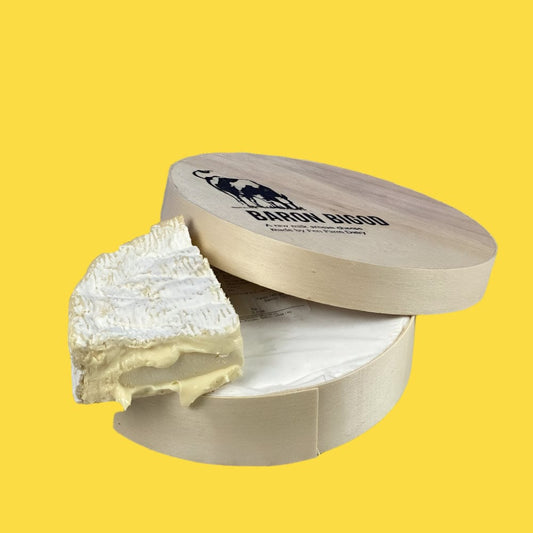
Baron Bigod

A raw milk Brie-style cheese that has become one of the most celebrated cheeses in Britain. Rich, indulgent and beautifully structured, it delivers deep creaminess, savoury complexity and a long, luxurious finish.

Truffle Baron

A decadent variation of Baron Bigod layered with truffle, adding an earthy depth and aromatic intensity to the cheese’s already rich, creamy profile.

Raedwald (seasonal)

A soft washed rind cheese with a deeper, more savoury character. Supple in texture, with brothy, meaty notes and a warming, lingering finish — a cheese that rewards those looking for something more complex.

Style & Character

Fen Farm cheeses are defined by:

  • Raw milk richness and depth
  • Immediate farm-to-dairy production
  • Handcrafted, small-scale methods
  • Exceptional texture and balance
  • A clear sense of place

These are cheeses where everything — pasture, herd, process — is aligned.

Why Fen Farm Dairy Matters

Fen Farm Dairy didn’t just produce a great cheese.

It changed perception.

Baron Bigod proved that East Anglia could stand shoulder to shoulder with the best cheese regions in Europe — not by copying, but by matching quality, technique and flavour.

It gave the region credibility.

And in doing so, it helped open the door for every other East Anglian cheesemaker that followed.

Recognition & Awards

Fen Farm Dairy’s flagship cheese, Baron Bigod, is one of the most decorated and widely respected cheeses in Britain.

Repeatedly recognised in the Fine Food Digest Awards as Best British Cheese (2022–2024, 2026), it has become a firm favourite among independent retailers — not just for its quality, but for its consistency and sell-through at the counter.

Alongside this commercial success, Baron Bigod continues to achieve top honours at leading competitions, including the World Cheese Awards, the British Cheese Awards, and the British and Irish Cheese Awards, where it has been awarded multiple Gold, Silver and Bronze medals.

These accolades reflect both the craftsmanship behind the cheese and its standing among judges and cheesemongers alike — a rare combination of critical acclaim and commercial success.

Few cheeses manage to be both award-winning and universally sought after — Baron Bigod is one of them

A Cheesemonger’s Perspective

At The Norfolk Deli, Baron Bigod is often the turning point.

It’s the cheese that makes customers stop, taste, and reassess what local cheese can be. From that moment, the conversation changes. And that’s the mark of something truly special.

Suffolk’s New Wave of Artisan Cheesemaking

Broughton Hall Dairy represents the next generation of East Anglian cheesemaking — small-scale, thoughtful and deeply rooted in both place and process.

Established in 2023 on the Tydeman family farm in Stonham Aspal, this is a young dairy with strong foundations. Milk is supplied by Jess and Scott at Salter’s Farm near Stowmarket, whose flock of Llyn cross Friesland and Lacaune sheep is bred for durability, health and milk quality. The sheep are kept outdoors year-round wherever possible, lambing and grazing in a way that reflects a low-intervention, welfare-led approach.

That milk — rich, expressive and perfectly suited to cheesemaking — sits at the heart of everything that follows.

From Kitchen Experiment to Cheesemaker

The story of Broughton Hall Dairy begins not in a dairy, but at home.

In 2020, during lockdown, Emily began making cheese in her kitchen — initially out of curiosity, but quickly discovering both a natural ability and a genuine passion for the craft. Wanting to understand the process properly, she approached neighbouring cheesemakers at Suffolk Farmhouse Cheese for work experience.

What began as one day a week soon became something more. Emily stepped into the role of head cheesemaker, leaving behind a 16-year career to fully commit to cheesemaking. Along the way, she trained, visited other producers and refined her understanding of both the science and artistry involved.

Encouragement from within the East Anglian cheese community — including Fen Farm Dairy — and early conversations with Neal’s Yard Dairy helped shape the vision that would eventually become Broughton Hall Dairy.

The Cheeses of Broughton Hall Dairy

Pyghtle

A soft, lactic ewe’s milk cheese with a delicate, creamy texture and bright acidity that develops slowly during production and maturation. Gentle, fresh and quietly complex, it reflects both the milk and the careful, unhurried process behind it.

The name Pyghtle comes from an old Suffolk word meaning a small enclosure of land — a fitting reference to the landscape surrounding the dairy, where small paddocks and grazing areas define the view from the cheese room.

Nettus

If Pyghtle was the cheese Emily wanted to make, Nettus was the cheese she needed to make.

Created in 2023, Nettus was born out of the natural rhythm of the farm — abundant milk during the season, followed by the need for a cheese that could mature and provide income through the autumn and winter months.

Developed in collaboration with Neal’s Yard Dairy, who also provided valuable maturation space, Nettus evolved through a series of trials into a semi-hard, washed rind cheese matured for at least three months.

The final cheese draws on elements of both Gouda and Manchego styles — offering structure, depth and a savoury, rounded profile with a gently developed rind.

The name Nettus comes from the East Anglian term “neat-house” — traditionally a small building used to house livestock. At Broughton Hall Farm, the original neat house still stands across the yard from the cheese room, linking the cheese directly back to its agricultural roots.

Style & Character

Broughton Hall cheeses are defined by:

  • Ewe’s milk richness and depth
  • Lactic, slow-set cheesemaking
  • Small-batch, hands-on production
  • A strong connection to pasture and season
  • A balance of science and craft

These are cheeses that evolve gently — rewarding patience rather than demanding attention.

Why Broughton Hall Dairy Matters

Broughton Hall Dairy brings something vital to the East Anglian cheese story: new energy, backed by strong foundations.

With links to established producers, a clear commitment to milk quality and a thoughtful approach to cheesemaking, this is a dairy that reflects where the region is heading — not just where it has been.

It’s early days, but that’s exactly what makes it exciting.

Because if East Anglia’s cheese reputation is growing, Producers like Broughton Hall Dairy are the reason why it will continue to do so.

Suffolk’s Modern Dairy Tradition

Suffolk Farmhouse Cheeses represents one of the most established and widely recognised cheesemakers in East Anglia — a family-run dairy built on experience, technical knowledge and a clear commitment to quality.

Founded in 2004 by Jason and Katharine Salisbury, the business grew from a shared ambition to run their own herd and produce cheese from their own milk. Jason brings over 30 years of dairy industry experience, while Katharine, a qualified veterinary surgeon, plays a central role in the cheesemaking itself.

From their farm at Creeting St Mary, just north of Needham Market, the dairy now produces a range of well-known cheeses using milk from their own herd of pedigree Guernsey and Jersey cows — breeds chosen for their rich, high-quality milk.

Everything is made on site. The milk is pasteurised on the farm and then carefully transformed into cheese using traditional methods and recipes refined over many years. Even the milking process reflects a modern, welfare-led approach, with a voluntary milking system allowing cows to choose when they are milked — improving both welfare and milk quality.

The Cheeses of Suffolk Farmhouse Cheeses

Suffolk Blue

A creamy, lightly blue-veined cheese with a smooth texture and a balanced depth of flavour. While the appearance of the blue veining can vary seasonally, the flavour remains consistently rich and approachable.

Suffolk Gold

A semi-hard farmhouse cheese with a rich golden colour and a creamy, rounded flavour. Buttery, slightly sweet and highly versatile, it works equally well on a cheeseboard or alongside something as simple as an apple.

Suffolk Blue Brie

A hybrid style combining the creamy softness of Brie with the gentle character of blue veining. Smooth, indulgent and well-balanced, offering richness without overpowering strength.

Style & Character

Suffolk Farmhouse cheeses are defined by:

  • Rich milk from Guernsey and Jersey cows
  • Traditional, on-farm production
  • Consistency across batches
  • Balanced, approachable flavour profiles
  • A blend of technical precision and farmhouse craft

These are cheeses that combine reliability with quality — a key part of the region’s everyday cheeseboard.

Why Suffolk Farmhouse Cheeses Matters

If some producers define the cutting edge of East Anglian cheesemaking, Suffolk Farmhouse Cheeses provides something equally important: consistency and recognisability.

These are cheeses that people come back to — well-made, dependable and widely enjoyed.

And in doing so, they help anchor the region’s reputation not just among enthusiasts, but among everyday cheese lovers as well.

East Anglian Cheese FAQs

What cheeses are made in East Anglia?


East Anglia produces a wide range of cheeses including soft bloomy rind cheeses like Baron Bigod and St Jude, washed rind cheeses such as St Cera and Raedwald, cheddar-style cheeses like Norfolk Dapple, as well as blue cheeses, goat’s milk cheeses and ewe’s milk cheeses including Norfolk White Lady and Pyghtle.

What is the most famous cheese from East Anglia?

The most famous East Anglian cheese is Baron Bigod, a raw milk Brie-style cheese made by Fen Farm Dairy. It is widely regarded as one of the best British cheeses and is stocked by leading cheesemongers across the UK and internationally.

Is there a traditional Norfolk cheese?

Yes — one of the earliest modern Norfolk cheeses is Norfolk White Lady, an ewe’s milk cheese first produced in 1999. Alongside this, cheeses like Norfolk Dapple have become strongly associated with the county.

Are there artisan cheesemakers in East Anglia?

Yes — East Anglia is home to a growing number of artisan cheesemakers including Mrs Temple’s, Fen Farm Dairy, St Jude Cheese, Norfolk & Better Farm, Ferndale Farm, The Goat Shed, Wilton Farm and Broughton Hall Dairy.

What milk types are used in East Anglian cheeses?

East Anglian cheesemakers use a variety of milk types including cow’s milk, goat’s milk and ewe’s milk. This diversity allows for a wide range of cheese styles, flavours and textures across the region.

What makes East Anglian cheese different?

East Anglian cheese is defined by high-quality local milk, small-scale production and a strong connection to the land. Many producers make cheese on-site using milk from their own herds, ensuring freshness and full flavour.

How do you build an East Anglian cheeseboard?

A balanced East Anglian cheeseboard should include:

  • A soft bloomy cheese (e.g. Baron Bigod or Norbert)
  • A fresh or lactic cheese (e.g. St Jude)
  • A cheddar-style cheese (e.g. Norfolk Dapple or a Walsingham)
  • A blue cheese (e.g. Suffolk Blue, Binham Blue or the Best in Britain award winning Jiffler Blue)
  • A goat’s or ewe’s milk cheese for contrast

Where can I buy East Anglian cheese?

Most East Anglian cheeses can only be found at specialist cheesemongers, farm shops and delis in East Anglia, as well as directly from producers. Some such as Baron Bigod, are also stocked nationally and internationally. A good place to go however is via our onlinbe store.

Are East Anglian cheeses suitable for vegetarians?

Some are, but not all. Many cheeses use traditional animal rennet, while others — such as those from Suffolk Farmhouse Cheeses — use vegetarian rennet. It’s always best to check individual cheeses.

Ready to Taste East Anglia?

You’ve read about the makers, the milk, and the cheeses shaping East Anglia’s growing reputation.

Now it’s time to taste them.

Whether you’re building your first regional cheeseboard or looking to explore something new, we’ve brought together a collection of the very best cheeses from across Norfolk and Suffolk — all hand-selected by our cheesemongers.

Shop East Anglian Cheeses

Discover soft, blue, goat’s and ewe’s milk cheeses from the region’s leading producers.

Build Your Own Cheeseboard

Choose your favourites and create a perfectly balanced selection, ready for any occasion.